


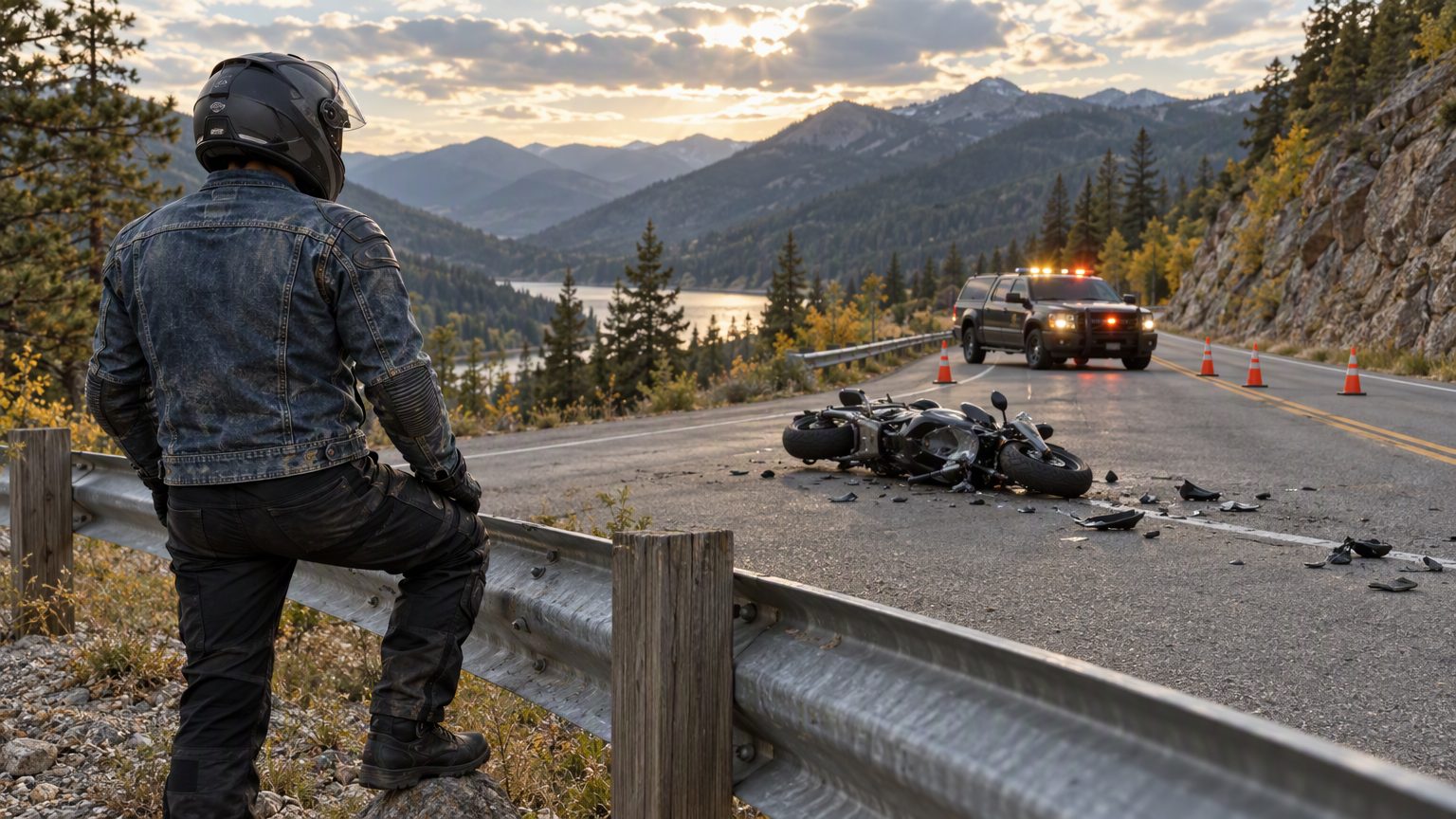
In motorcycle accident reconstruction, small details can carry weight. After injuries have been addressed, collect them only if you can stay clear of moving traffic and other immediate hazards. In U.S. traffic crashes, NHTSA reported that 6,366 motorcyclists died in 2023, accounting for 15% of traffic fatalities. Instead of a roadside photograph, your record might begin with a note written later. Behind a barrier, wait in a protected spot while emergency lights secure the closed lane.
Safety outranks motorcycle accident reconstruction
Get yourself out of the traffic stream
Before reaching for your phone, check for hazards. Check for leaking fuel or fire, with moving traffic and poor visibility also in mind.
Don't overlook scattered debris while watching unstable vehicles.
Call 911 and follow the dispatcher’s or responders’ instructions if you're injured or disoriented or facing fire or moving traffic. Until it's safe, don't move. A protected shoulder or sidewalk may offer refuge; use a median only when you can reach it without crossing traffic. When movement risks worsening an injury, follow emergency-dispatch instructions.
At 31.39 deaths per 100 million vehicle miles traveled, NHTSA publication 813762 puts the 2023 motorcycle fatality rate at almost 28 times the passenger-car occupant rate of 1.13. No photograph is worth stepping into an active lane.
Call police and cooperate without guessing
Once it's safe to do so, call police. Responders can identify witnesses as they record who's involved and what they see. Have them give you the incident number. Without guessing speed or distance, tell only what you know and leave fault out of it.
Massachusetts riders should get official crash-reporting instructions from the Massachusetts RMV. Write the responding agency's name beside the incident number in your notes after asking how to request the police report.
Document the scene without entering danger
Photograph positions only when you have a protected viewpoint
Take wide photographs only from a protected viewpoint. A shoulder isn't automatically safe: skip the photographs if vehicles are passing close to you.
Stay in that protected spot to photograph the roadway and final vehicle positions, then visible damage; don't move toward traffic or unstable vehicles. If you can see traffic controls or lane markings, include them. Look for objects blocking sightlines as well as fluid trails and debris.
For a better angle, never cross moving traffic or climb over a barrier. Getting a photograph shouldn't interfere with responders or delay necessary vehicle removal. Take no measurements in traffic, and let responders handle detached parts.
Keep original image files intact
Keep full-resolution originals with their metadata; don't change those files. Don't crop or apply filters to the preservation copy. For annotations, use a separate working copy. Back up your originals (without compression), since screenshots and messaging-app copies may lose detail or metadata.
Have the original files available for motorcycle accident reconstruction if questions later arise about vehicle movement or visibility. Don't annotate or compress any of those original files.
Dozens of edited shots lose out to a few intact photographs with location notes if the edited shots don't identify the roadway. The separate label should name the street and the direction of each view.
Record conditions that a photograph may miss
Along with the approximate time and weather, write down lighting and road surface. Record construction activity without leaving out anything blocking your view. A short spoken memo is fine once you're somewhere protected. Don't start dictating until you're clear of moving traffic.
Keep what you saw separate from what you assume. Your record needs observations, not a verdict. Be specific about an obstruction, such as a parked van.
Collect witness details without coaching anyone
From somewhere safe, ask a willing witness for their name and preferred contact method. Their position and observations are what you need to ask about. Avoid suggesting answers or arguing about what happened.
Note a witness's departure and give the officer their contact details if they leave before police arrive. Don't mix their account into your own observations. Record who gave the account, adding where they stood to the note.
Preserve the motorcycle, riding gear, and digital records
Pause repairs until damage has been documented
Wait to repair or dismantle the motorcycle until you've photographed its condition and completed relevant inspections. Hold off on selling it, without authorizing scrapping or disposal. Detached parts belong in storage when it's practical and permitted. Along with towing invoices and storage records, keep repair estimates filed with inspection correspondence.
Store damaged riding apparel carefully
Your helmet, armored motorcycle jeans, jacket, gloves, and boots need photographing after medical care, before you clean or unnecessarily handle them. Don't wash or patch the damaged apparel. Don't cut the gear you're keeping. Trapped moisture encourages mold, so wet items need to dry somewhere secure before you store each one separately. Tears and displaced armor need to stay untouched, along with the impact marks and abrasions.
Protect files that can be overwritten
Stop helmet-camera or action-camera recording once you're safe, before looping wipes out the footage. After exporting a working copy, don't discard the original memory card or file. With GPS logs and relevant motorcycle-app records, keep the photographs from your phone. To avoid losing footage from the crash time, ask nearby property owners to save their surveillance recording. Don't trespass or insist on access.
| Evidence | Safe action | Avoid |
|---|---|---|
| Scene photographs | Use a protected viewpoint and retain originals. | Entering traffic or editing preservation copies. |
| Motorcycle and detached parts | Photograph condition and coordinate inspection before repairs. | Premature repairs or disposal. |
| Helmet and riding apparel | Photograph items; dry when necessary before separate storage. | Cleaning or altering damage; reusing damaged gear. |
| Digital recordings | Retain originals and create working copies. | Compression, overwriting, or deleting source media. |
Questions riders often ask after a collision
Which motorcycle crash pattern appears most often?
A serious multi-vehicle crash pattern described in NHTSA’s motorcycle-safety materials involves vehicles turning left. To call any crash pattern universally “most common,” you need a defined dataset; national databases group crashes differently. Fatal multi-vehicle crashes don't belong in the same comparison as parking-lot tip-overs; check the crash categories.
How reliable can crash reconstruction be?
Don't expect one universal accuracy percentage. Assessing crash evidence is among the topics covered by SAE International’s Accident Reconstruction Certificate training. For a reliable reconstruction, measurements and physical marks need photographs or vehicle data behind them; witness accounts and the analyst’s assumptions count too. An analyst who reports responsibly won't present every estimate as exact, giving ranges and limitations. Roadway measurements or camera footage, for example: ask which records the estimate is based on.
What happened in Treat Williams’s motorcycle collision?
In June 2023, Vermont State Police reported an SUV turning left across the path of Treat Williams’s oncoming motorcycle near Dorset, Vermont.
Does insurance pay when a motorcycle falls over?
Whether your motorcycle policy covers the damage depends on its exclusions and what caused the loss. Don't expect guaranteed payment for a tip-over. For tip-over losses, check collision coverage; look at comprehensive coverage for theft or vandalism, as well as weather damage. What's covered is a question for your insurer. Your deductible and exclusions are in the policy and declarations page; check there.
How is fault determined in a motorcycle collision?
Whatever vehicle a road user is using, that alone doesn't make them at fault. When assessing fault, your jurisdiction’s traffic rules matter alongside what's been recorded. Statements and video belong among the evidence investigators and insurers weigh, alongside visibility and vehicle movement. A civil case needs more than the responding agency’s police report to settle who's responsible, since legal standards differ by jurisdiction.
What does the 12-second riding rule mean?
Motorcycle Safety Foundation’s Basic RiderCourse Rider Handbook teaches riders to look roughly 12 seconds ahead for hazards as they develop. For this rule, look ahead rather than measuring your following distance. Watch for changes along your intended path that call for a response, without closing your safe gap behind the vehicle ahead.
Evidence worth keeping
Don't collect anything before protecting your health. Police records document what responders did, so file them separately from untouched photographs showing the visible conditions. With witnesses' contact details, others can follow up. Marks still on your motorcycle and riding apparel are easier to explain with the digital files. Leave the scene and damaged property untouched as you put that record together. The incident number belongs beside the folder where you keep your original files.
Sources
- NHTSA’s Traffic Safety Facts: Motorcycles (publication 813732) and motorcycle fatality rates by mileage (publication 813762).
- Vermont State Police: June 2023 collision reporting.
- SAE International: Accident Reconstruction Certificate; Motorcycle Safety Foundation: Basic RiderCourse Rider Handbook.
- The Massachusetts RMV provides official crash-reporting instructions.
ABOUT THE AUTHOR
Fred Felton
Content Creator / Editor
Fred Felton is a copywriter, editor and social media specialist based in Durban, South Africa. He has over 20 years of experience in creating high end content. He has worked with some of the biggest brands in the world. Currently Fred specialises in the motorbiking adventure space, focussing on all types of biking both on and offroad. He is also a keynote speaker and has presented talks and workshops in South Africa.