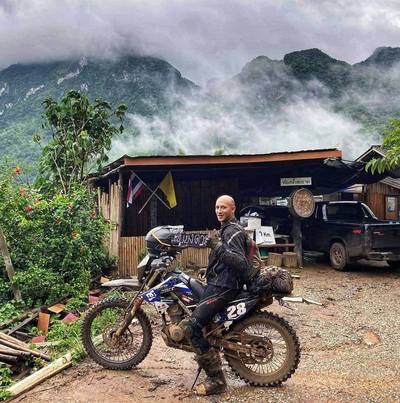



There's a moment every fall when the morning air bites a little harder and you realize the riding season is closing in. For a lot of us that means the bike is about to sit for three or four months. How you park it now decides how it starts in spring: on the first press of the button, or after a weekend of chasing a dead battery, stale fuel and a sticky clutch.
Winterizing a Harley isn't complicated, but it does reward doing things in the right order. Here's the checklist we follow every year.
Start With the Manual for Your Exact Model
Every Harley family has its own quirks. A carbureted Evo Softail, a fuel-injected Sportster and a Twin-Cooled Touring bike don't store the same way.
Fluid types, capacities, torque values and the factory storage procedure are all spelled out in the Harley-Davidson service manual for your model year. Keep it open while you work and you'll never guess at a drain plug torque or the wrong fluid again.
Wash It, Dry It, Protect It
Road grime, bug guts and salt sit on paint and chrome all winter and slowly eat into them. Give the bike a proper wash, then dry it completely, including the spots water hides: the frame rails, under the seat and around the switch housings.
Once it's dry:
- Wax painted surfaces and polish the chrome to seal them.
- Wipe a light protectant on exposed metal such as brake lever pivots and footpeg mounts.
- Treat leather seats and saddlebags with conditioner so they don't crack in dry winter air.
Change the Oil Before Storage, Not After

This is the step most riders get backwards. Used engine oil carries acids and moisture from combustion.
Leave it sitting in the engine all winter and those contaminants get months to work on bearings and internal surfaces.
Change the engine oil and filter now, so the bike rests on clean oil.
While you're at it, check when the primary chaincase and transmission fluids are due.
Harley's big twins use separate oils for the engine, primary and transmission, and your service schedule will show if they're due this season. Run the engine for a few minutes afterwards to circulate the fresh oil, then check the level using the method your manual describes. Harley's dipstick procedures differ between models, so don't assume.
Deal With the Fuel
Modern pump fuel, especially ethanol blends, starts to break down within weeks and absorbs moisture from the air. Left alone, it leaves varnish in fuel systems and can cause corrosion inside a steel tank.
- Fill the tank nearly full. Less air space means less room for condensation.
- Add a fuel stabilizer at the dose on the bottle.
- Run the engine for five to ten minutes so treated fuel reaches the injectors or carburetor.
- On carbureted models, you can also drain the float bowl to keep old fuel out of the small jets. Your manual shows where the drain screw is.
Keep the Battery Alive
A battery left on its own over winter will slowly discharge. Many Harleys also draw a small current for the security system and clock, so a battery can go flat in a few weeks.
Connect a smart battery maintainer, not an old-style trickle charger that can overcharge. Many models have an accessory charging plug that makes this a two-minute job. If the bike is stored somewhere that drops well below freezing, take the battery out and keep it on the maintainer indoors. A discharged battery can freeze and crack, while a charged one is far more resistant to cold.
Take Care of the Tires
A heavy bike sitting in one spot for months can develop flat spots, especially in the cold.
- Inflate both tires to the pressures on your tire label or in the manual.
- If you can, lift the bike so the tires carry no weight. Most Harleys have no center stand, so a motorcycle jack or lift is the usual answer.
- If the bike has to stay on the ground, roll it a few inches every couple of weeks so the same patch of rubber isn't always loaded.

Check Brakes, Cooling and Cables
Brake fluid absorbs moisture over time, and winter is a good time to check its condition and level.
Use the exact fluid your manual specifies. Older Harleys used DOT 5 silicone fluid and later models use DOT 4, and the two must never be mixed.
Liquid-cooled models, including Twin-Cooled Touring bikes, the V-Rod and the Street, need antifreeze protection rated for your coldest winter temperatures. The Touring service manuals list the correct coolant type and capacity for each year, and that matters on bikes where only the cylinder heads are liquid cooled.
Finish with a few drops of lubricant on the clutch cable, throttle cables and lever pivots, so they work smoothly when you pull the bike out.
Keep the Critters Out
Mice love a quiet garage and a warm, sheltered air cleaner. Stuff a rag or a ball of steel wool into the exhaust tips and over the intake opening. Then put a bright note on the handlebars reminding yourself to remove them before the first start in spring.
Cover it the Right Way
Use a breathable motorcycle cover, not a plastic tarp. Tarps trap moisture against the paint and chrome, and that's worse than no cover at all. Store the bike somewhere dry and ventilated if you can, and away from things that give off corrosive fumes, such as stored pool chemicals.
Don't Forget Your Riding Gear
Your gear works as hard as your bike, and it deserves the same end-of-season care.
- Wash riding jeans and textile pants according to the care label. Reinforced and armored pants usually need the armor removed first.
- Check seams and stitching for wear while it's easy to repair.
- Condition leather jackets and gloves, and let everything dry fully before you put it away.
- Hang gear in a dry closet rather than a damp garage, where mildew can start over the winter.
A few minutes now means your gear is clean, safe and ready when the first warm day shows up.
Waking it Up in Spring
When the days get longer, reverse the process:
- Remove the exhaust and intake plugs.
- Reinstall or check the battery.
- Set tire pressures and check belt tension.
- Check every fluid level.
- Test the brakes in the driveway before you head out.
Treat the first ride as a shakedown and keep it short and close to home. If you followed the steps above, the bike should start and ride as well as it did in the fall.
Frequently Asked Questions
Should I start my motorcycle during winter storage? Only if you can ride it long enough to reach full operating temperature. Starting the engine and letting it idle for a few minutes creates condensation inside the engine and exhaust without getting hot enough to burn it off. If you can't ride it, leave it on the battery maintainer and let it sleep.
Can I store my Harley outside for the winter? You can, but it's a compromise. Use a quality breathable cover, get the bike off bare ground if possible, take the battery indoors and check under the cover regularly for moisture or nesting animals. A garage or storage unit is always the better choice.
Do I need to change the oil if I only rode a few hundred miles since the last change? Even at low mileage, oil collects moisture and combustion byproducts, especially on short trips where the engine never fully warms up. Changing it before storage is cheap insurance for the engine.
ABOUT THE AUTHOR
Fred Felton
Content Creator / Editor
Fred Felton is a copywriter, editor and social media specialist based in Durban, South Africa. He has over 20 years of experience in creating high end content. He has worked with some of the biggest brands in the world. Currently Fred specialises in the motorbiking adventure space, focussing on all types of biking both on and offroad. He is also a keynote speaker and has presented talks and workshops in South Africa.